
October 20, 2026
Registry vs Intiqal in Pakistan, Key Differences
Registry vs Intiqal in Pakistan, Key Differences...
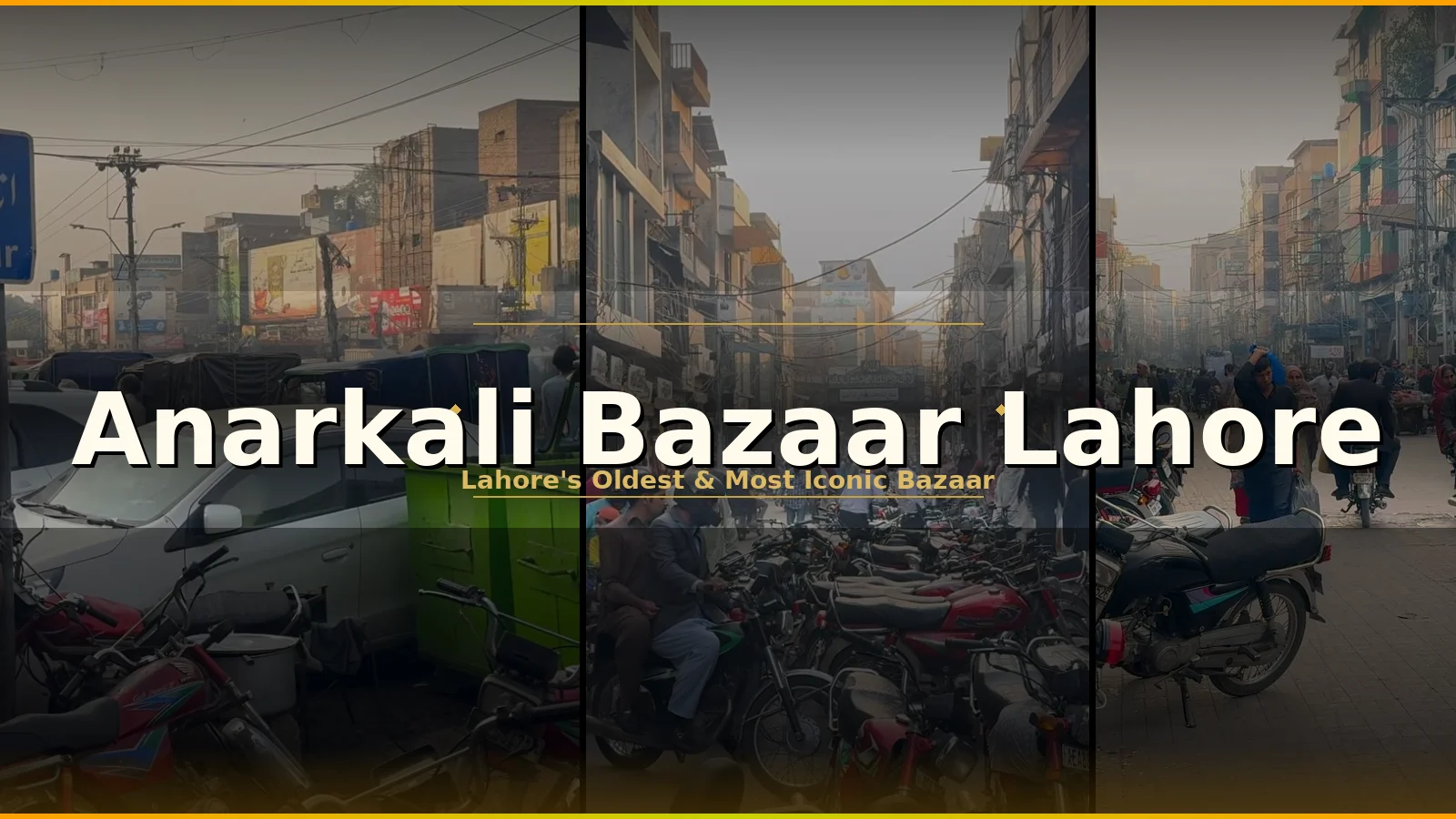
Walk into Anarkali Bazaar and you walk into history. Every narrow lane, every centuries-old building façade, every food stall sizzling with spices at dawn carries the weight of over two hundred years of unbroken commerce, culture, and community. Anarkali Bazaar is not merely Lahore's oldest market, it is the soul of the city itself, a living, breathing monument to everything that makes Lahore irreplaceable.
This complete guide covers every corner of Anarkali Bazaar: its legend-soaked history, the distinct characters of Old Anarkali and New Anarkali, the iconic Bano Bazaar and its famous lanes, all the food worth eating, the landmarks worth finding, timings, location, how to get there, and why this ancient bazaar listed on the World Monuments Watch — matters more today than ever.
Detail | Information |
|---|---|
Full Name | Anarkali Bazaar, Lahore |
Location | Mall Road, Lahore (between Urdu Bazaar and Lahore Museum) |
Area Covered | Extends from Lahori Gate southward across Mall Road |
Primary Axis | Approximately 967 metres |
Market Type | Historic open-air bazaar with covered sub-markets |
Sections | Old Anarkali (food) + New Anarkali (shopping) |
Famous Sub-Markets | Bano Bazaar, Dhani Ram Road, Paan Gali, Paisa Akhbar, Paris Market, Babar Market, Khanum Market |
Timings | Daily 10:00 AM – 10:00 PM |
Nearest Metro | Anarkali Metro Bus Station (on Shahrah-e-Quaid-e-Azam) |
Entry Fee | Free — open public market |
World Heritage Status | Listed on 2020 World Monuments Watch by the World Monuments Fund |

Every great bazaar has a story. Anarkali's story is one of forbidden love, imperial fury, and a legend that has endured for centuries.
Anarkali Bazaar derives its name from the nearby mausoleum thought to be that of a tawaif named Anarkali, who was chased out of town by order of the Mughal Emperor Akbar for having a love affair with his son, Prince Salim, who would later become Emperor Jahangir.
According to the legend, Emperor Akbar — upon discovering his son's forbidden romance — ordered Anarkali to be entombed alive within a wall. When Prince Salim later ascended the throne as Emperor Jahangir, he is said to have built a grand mausoleum over her grave, inscribed with a Persian couplet expressing undying love.
The Tomb of Anarkali stands today near the Civil Secretariat Lahore and now houses the Punjab Archives. Most historians acknowledge that the romantic legend cannot be verified — there is no mention of Anarkali in Emperor Jahangir's autobiography or other royal records from that period. The most historically accepted account suggests the tomb may actually be that of Akbar's wife, Sahib-i-Jamal Begum. But in Lahore, the legend endures — and the bazaar that bears her name endures with it.
Anarkali Bazaar is one of the oldest surviving markets in the Indian Subcontinent, dating back at least 200 years. Some historians trace commercial activity in this area to the Mughal era itself, making the bazaar's roots potentially much deeper than two centuries.
The market evolved organically over time. Mughal rulers and later British colonialists both contributed to the development of Lahore's urban infrastructure, and by the early 19th century, Anarkali Bazaar had become a central pillar of the city's commercial and social life.
During the British colonial era, the area around Mall Road was developed significantly — the Lahore Museum, Government College University, and the Punjab Secretariat all rose in this neighbourhood, bringing educated and administrative classes into proximity with the bazaar and further cementing its role as a gathering point for all of Lahore society.
By the 20th century, Anarkali had become the shopping reference point for the entire Punjab. Political families, government officials, merchants, and ordinary citizens all shopped here. A shopkeeper who first came to work in Anarkali in 1958 once recalled: "At that time, in the whole of Punjab there was only one market — this Bano Bazaar. Especially for female shoppers, they felt as if they were walking within the four walls of their own home."
Today, the Walled City of Lahore Authority (WCLA) has initiated a Rs124 million conservation project for the adjacent Anarkali Tomb in 2024, focusing on structural repairs, facade restoration, and landscaping to preserve the 17th-century Mughal monument. By October 2025, approximately 75 percent of the work had been completed, with full completion targeted for June 2026.
The bazaar was listed in the 2020 World Monuments Watch by the World Monuments Fund to highlight the urgent need for its preservation and protection, since it is currently endangered due to neglect.
Address: Anarkali Bazaar, Mall Road, Lahore, Punjab, Pakistan
Anarkali Bazaar is situated in the region that extends from the south of Lahori Gate of the Walled City to across the Mall Road. It sits directly opposite the Lahore Museum and is nestled between Urdu Bazaar on one side and Mall Road on the other — placing it at the geographic and historic heart of Lahore.
By Metro Bus: The most convenient option. Anarkali Metro Bus Station on Shahrah-e-Quaid-e-Azam places you directly at the bazaar's doorstep.
By Car / Rickshaw: Accessible from any part of Lahore via Mall Road. Parking inside and around the bazaar is limited and can be challenging — parking outside the market and walking in is strongly recommended.
From Lahore Railway Station: Anarkali Bazaar is approximately 1 km from Lahore Railway Station — a short rickshaw or walking distance.
From Liberty Market / Gulberg: Approximately 15–20 minutes by car via Mall Road.
From DHA Lahore: Approximately 25–30 minutes via Canal Road and Mall Road.
Ride-Hailing: Search "Anarkali Bazaar Lahore" or "Neela Gumbad Lahore" on Careem or Uber — both landmarks are well recognised.
The bazaar spans approximately 967 metres along its primary axis, blending historic and contemporary elements in its built form. It is broadly divided into Old Anarkali, focused on food stalls and traditional eateries, and New Anarkali, which hosts a wider array of retail shops for clothing, jewelry, and handicrafts. Three distinct nodes define the internal structure: Node 1 integrates stores, warehouses, and residential units; Node 2 centers on Bano Bazaar, accessed via a 25-foot-wide gateway and specialising in women's apparel; and Node 3 incorporates Sikh architectural influences, including the Dhani Ram Temple.
Architecturally, the bazaar exhibits a fusion of traditional Mughal, Sikh, colonial, and modern styles, with many structures comprising double- or triple-story buildings featuring wooden or iron balconies.

Old Anarkali is the older, food-centric section of the bazaar — a dedicated culinary destination that has been serving Lahore since the colonial era. It runs along a section of the bazaar south of Mall Road and is most famous for its traditional breakfast spots, legendary street food vendors, and restaurants that have been operating for generations.
The Old Anarkali Bazaar is noted for its traditional food items. Centuries-old buildings line the narrow lanes, many with wooden or iron balconies projecting over the walkways below. The architecture alone — a layered fusion of Mughal stonework, Sikh decorative elements, and British colonial facades — makes Old Anarkali one of the most visually captivating streets in all of Pakistan.
The food street here comes alive well before sunrise. Haleem vendors begin their preparations at 3 AM. Breakfast establishments serving halwa puri draw early-morning regulars who have been eating here for decades, some since childhood. The sizzle of spices, the clang of cooking vessels, and the rich aromas of slow-cooked meat dishes fill the early morning air before any shopping has even begun.
Sunday visits to Old Anarkali are special for a different reason entirely, vendors line the lane selling old books, rare magazines, and vintage publications at throwaway prices. Finding a 1970s edition of Reader's Digest or a rare Urdu novel from pre-Partition Lahore is entirely possible on a Sunday morning browse through Old Anarkali.
Neela Gumbad (The Blue Dome): One of the most distinctive visual landmarks of the entire bazaar area. The turquoise dome of this historic mosque rises majestically above the surrounding buildings and serves as a navigational reference point within the bazaar. Dahi bhalla vendors near Neela Gumbad are among the most visited in Lahore.
Mohkam Din Bakery: A historic bakery on the main Anarkali road that has been feeding Lahorites for generations. The haleem served here from early morning has built a loyal following that spans decades, regulars who first came as children now bring their own children.
Tomb of Sultan Qutb-ud-din Aibak: Located within the bazaar area, this is the mausoleum of the first Sultan of Delhi, one of the most historically significant individuals in South Asian history. He died in Lahore after falling from a horse while playing polo.
Delhi Muslim Hotel: One of the oldest hotels in Lahore, located on the main Old Anarkali street. Its quiet interior and old-world character stand in contrast to the bazaar's constant bustle outside.
The New Anarkali Bazaar is noted for its traditional handicraft and embroidery. This is where the bulk of Anarkali's shopping takes place a dense, layered network of shops, lanes, and sub-markets covering clothing, jewellery, bridal wear, footwear, handicrafts, accessories, and much more.
New Anarkali is a paradise for shoppers of every budget. Prices here are consistently lower than modern markets like Liberty, a dupatta that costs PKR 6,000 in premium markets can often be found for PKR 2,000 in New Anarkali, without compromise on quality or variety.
Within the New Anarkali Bazaar are markets known as Bano Bazaar, Dhani Ram Road, Jan Muhammad Road, Aabkari Road, Paisa Akhbar, Urdu Bazar, Aibak Road and Paan Gali.
Bano Bazaar is the most celebrated and most visited sub-market within New Anarkali. Accessed through a distinctive 25-foot-wide gateway, Bano Bazaar is a semi-covered network of lanes specialising almost entirely in women's fashion, bridal wear, accessories, and beauty products.
For generations, Bano Bazaar has been described by shopkeepers and regulars alike as a place where female shoppers feel a deep sense of comfort and belonging within its narrow, covered lanes. Sheikh Mubarak Ali, who has been running a small dupatta shop here since 1965, put it best: "Even now there is no bazaar like Bano Bazaar. People come here not just because they are looking for variety but also because they feel a sense of connection and safety within the narrow, covered lanes of Bano Bazaar."
Bano Bazaar is the destination of choice for:
Bridal wear and formal dresses — from heavily embroidered lehengas to festive shalwar kameez
Embroidered and printed fabric — a vast selection of seasonal and occasion-specific textiles
Artificial jewellery — bangles, earrings, tikkas, necklaces, and maang tikkas at budget prices
Henna (mehndi) — fresh henna cones and traditional application stalls
Women's footwear — from traditional khussas to contemporary heeled sandals
Accessories — hairpins, clips, ribbons, scarves, and handbags
Cosmetics — local and imported beauty products
One of New Anarkali's most well-known internal lanes, Dhani Ram Road is famous for high-quality crockery and handicrafts. It takes its name from a pre-Partition trader and retains a historical character unlike the broader bazaar.
A famous lane within New Anarkali historically associated with paan (betel leaf) vendors — now a mixed lane with a variety of small shops and street vendors.
One of the named commercial clusters within the Anarkali ecosystem, Paris Market adds a quirky contrast of modernity to the ancient surroundings and houses clothing and accessories.
Another well-known sub-market within the Anarkali network, offering a range of goods from clothing to daily household items.
Part of the broader New Anarkali commercial web, Khanum Market caters particularly to women shoppers and is part of the cluster that surrounds Bano Bazaar.
One of the named streets within New Anarkali — historically associated with print and publication activity, now a commercial lane within the bazaar's broader network.
Specialises in bridal wear and intricately embroidered shawls and traditional dresses — particularly popular during the wedding season.
Anarkali Bazaar is a destination for virtually every shopping category a Lahori or a visitor could need:
The bazaar's single largest category. Anarkali is famous for hand-embroidered shalwar kameez, bridal lehengas, formal anarkali suits (fitting name for the market), fabric for stitching, ready-to-wear casual wear, and seasonal collections all at prices significantly below premium markets.
Between Bano Bazaar's bridal lanes, Rang Mahal's embroidered shawls and Kinaari-style accessories, and the dozens of tailoring shops offering custom stitching, Anarkali constitutes a near-complete wedding shopping destination on a budget.
Both artificial and real jewellery are widely available. The bazaar's jewellery shops range from small stalls selling affordable bangles and earrings to more established shops offering traditional gold and silver pieces.
Traditional handcrafted khussas, contemporary women's footwear, and leather goods are all sold throughout Anarkali and particularly in Bano Bazaar.
Anarkali is one of the best places in Pakistan to buy authentic Pakistani handicrafts from pottery and woodwork to embroidered textile pieces, calligraphy, and decorative items. Antique shops scattered throughout the bazaar offer vintage artefacts, coins, and handmade items for collectors.
On Sundays, a remarkable book market sets up in Old Anarkali. Rare books, old magazines, vintage Urdu publications, and academic texts appear at throwaway prices, a hidden treasure for bibliophiles.
While not its primary identity, New Anarkali also offers electronics, mobile accessories, and household goods at competitive prices in sections like Neela Gumbad.
Anarkali's food culture is as storied as its shopping. The Old Anarkali Food Street is considered by many to be one of the greatest street food destinations not just in Lahore but in all of Pakistan.
New Anarkali Bazaar is also famous for halwa puri of Ghoshe-e-Shireen, Zafar and Imam Din; nihari of Waris and siri paye of Nasir.
Nasir Bong Paye — Legendary slow-cooked trotters, a cult dish with queues that form before the sun rises.
Saleem Butt's Mutton Channay — One of the most talked-about street food spots in Lahore, serving spiced chickpeas with mutton in a recipe unchanged for decades.
Phajja Siri Paye — A morning institution serving siri paye (goat and cow trotters) that draws regulars from across the city.
Halwa Puri (Ghoshe-e-Shireen / Zafar & Imam Din) — Lahore's most beloved breakfast combination, served at the bazaar's most iconic breakfast stalls.
Dahi Bhalla near Neela Gumbad — Soft lentil dumplings smothered in yogurt and tamarind chutney, sold outside the Blue Dome mosque and considered among the best in the city.
Fruit Chaat (Bano Bazaar) — The fruit chaat of Bano Bazaar is famous enough that some visitors come to Anarkali specifically for this one dish.
Butt Karahi — A legendary karahi spot in Old Anarkali, famous for its mutton and chicken karahi cooked with a unique spice blend.
Chole Bature — Considered by many food lovers to be the best chole bature in all of Lahore.
Amal Desserts — A beloved roadside mini-bakery in Old Anarkali known for its desserts and sweets.
Mohkam Din Haleem — Prepared from 3 AM daily, this haleem stall has been featured in newspapers for the devotion of its regulars.
Anarkali Bazaar sits at the centre of one of the most historically dense neighbourhoods in Pakistan. Within a short walking or driving distance you will find:
Landmark | Distance | Significance |
|---|---|---|
Lahore Museum | Adjacent (across Mall Road) | One of South Asia's most important museums |
Tomb of Anarkali | 5 minutes | The legendary mausoleum, now Punjab Archives |
Lahore Fort | 15 minutes | UNESCO World Heritage Site |
Badshahi Mosque | 15 minutes | One of the world's largest mosques |
Government College University (GCU) | 5 minutes | Historic Gothic-style campus, est. 1864 |
University of the Punjab | 10 minutes | One of Pakistan's oldest universities |
Tomb of Qutb-ud-din Aibak | Within bazaar | First Sultan of Delhi, died in Lahore |
Masjid Wazir Khan | 20 minutes | One of the most ornate Mughal mosques |
Lahore Railway Station | 5 minutes | Historic British-era station |
Neela Gumbad | Within bazaar | The iconic Blue Dome mosque, local landmark |
Anarkali Bazaar operates daily from 10:00 AM to 10:00 PM. The food street in Old Anarkali begins even earlier, some famous breakfast spots open as early as 6:00 AM.
Time | Experience |
|---|---|
6:00 AM – 9:00 AM | Old Anarkali food street at its finest — haleem, nihari, siri paye, halwa puri |
10:00 AM – 1:00 PM | Shopping with lighter crowds and attentive shopkeepers |
2:00 PM – 6:00 PM (Weekdays) | Best shopping window — most shops open, manageable crowds |
After sunset | Old Anarkali food street revives; the bazaar lights up |
Sunday mornings | Rare book market in Old Anarkali — unmissable for book lovers |
October – March | Best weather for extended bazaar exploration |
Wedding season (Nov–Feb) | Peak shopping for bridal wear — more crowded, but maximum variety |
Wear comfortable walking shoes. The bazaar involves significant walking on uneven, narrow surfaces. Comfortable footwear is essential, especially for extended visits.
Bargaining is mandatory. Prices in Anarkali are not fixed. Polite but firm negotiation is the norm and expected, starting at 50–60% of the asking price is common practice.
Visit Old Anarkali for breakfast. The food street is at its most authentic and least crowded in the early morning hours. Arriving at 7–8 AM for halwa puri or siri paye is a quintessential Lahori experience.
Keep your belongings secure. The bazaar's crowded conditions make pickpocketing a known risk. Keep wallets, phones, and handbags secure and in front of your body.
Come with a local if it is your first visit. The bazaar's maze-like layout can be disorienting the first time. A local guide even a shopkeeper will happily orient you and negotiate on your behalf.
Park outside and walk in. Driving into Anarkali is not recommended. Parking is severely limited and the lanes are too narrow for comfortable vehicle navigation. Rickshaws and Metro Bus are the most practical options.
Visit on Sunday for rare books. The Sunday book market in Old Anarkali is one of Lahore's best-kept secrets, rare finds at extraordinary prices.
Anarkali Bazaar has survived empires, partition, urban expansion, and the rise of modern shopping malls. It has outlasted every trend and every challenge because it offers something no mall can replicate, an authentic connection to Lahore's living past.
Walking through Anarkali is walking through centuries of Lahori life compressed into one labyrinthine, sensory-rich, endlessly surprising place. The buildings carry Mughal, Sikh, and British architectural DNA. The food recipes have been passed from father to son for generations. The shopkeepers remember customers whose grandparents first visited their stalls. The lanes of Bano Bazaar have seen brides shop for their trousseau since before Pakistan existed.
This is why the World Monuments Fund placed Anarkali on its 2020 Watch List. Not because it is a museum exhibit but because it is a living, trading, breathing bazaar that needs protection to survive for another two hundred years.
Q: What is Anarkali Bazaar famous for?
A: Anarkali Bazaar is famous for being one of the oldest markets in Asia with over 200 years of history. It is renowned for bridal wear, embroidered clothing, jewellery, handicrafts, and Lahore's most legendary street food including Nasir Bong Paye, Saleem Butt's Mutton Channay, halwa puri, siri paye, and dahi bhalla.
Q: What is the difference between Old Anarkali and New Anarkali?
A: Old Anarkali is the food street section — famous for traditional eateries, breakfast spots, and street food vendors active from early morning and after sunset. New Anarkali is the shopping section with clothing, jewellery, handicrafts, and bridal wear, housing sub-markets like Bano Bazaar, Dhani Ram Road, and Paan Gali.
Q: What is Bano Bazaar in Anarkali Lahore?
A: Bano Bazaar is the most famous sub-market within New Anarkali, accessed through a 25-foot gateway. It specialises in women's clothing, bangles, henna, bridal wear, footwear, and accessories. It is considered the heart of Anarkali's women's shopping culture and has been operating for over 60 years.
Q: What are Anarkali Bazaar timings?
A: The shopping sections are open daily from 10:00 AM to 10:00 PM. The Old Anarkali food street begins as early as 6:00 AM for breakfast and comes alive again after sunset.
Q: Where is Anarkali Bazaar located?
A: Anarkali Bazaar is on Mall Road, Lahore extending from Lahori Gate of the Walled City southward across Mall Road. It is directly opposite the Lahore Museum, a 5-minute walk from Lahore Railway Station, and accessible via the Anarkali Metro Bus Station.
Q: Why is Anarkali Bazaar called Anarkali?
A: It is named after the nearby Tomb of Anarkali, associated by legend with a Mughal courtesan who was said to have been entombed alive by Emperor Akbar for her love affair with Prince Salim (later Emperor Jahangir). The legend, though unverified historically, has given the bazaar its enduring name and romantic mystique.
Q: Is Anarkali Bazaar good for wedding shopping?
A: Yes. Anarkali Bazaar — particularly Bano Bazaar and Rang Mahal is one of Lahore's top destinations for budget-friendly wedding shopping. Bridal dresses, embroidered fabric, jewellery, accessories, and tailoring are all available at significantly lower prices than premium markets.
Anarkali Bazaar's central location on Mall Road flanked by Lahore Museum, Government College University, the Walled City, and Lahore Railway Station makes the surrounding area one of the most commercially significant in the old city. Shops near Anarkali, particularly along Mall Road and the bazaar's main entrances, benefit from some of the highest pedestrian footfall in Lahore.
For investors and business owners, commercial properties in the Anarkali and Mall Road corridor offer:
Dense daily footfall from shoppers, students, and tourists
Proximity to Lahore's major heritage tourism circuit
Strong rental demand from established traders
Long-term appreciation linked to heritage conservation and urban renewal projects
If you are looking to buy or rent a commercial shop in Lahore near Anarkali Bazaar, Property Dealer connects you with verified listings and registered property dealers in this area.
Advertisement
Property Dealer Team
Property Expert
Experienced real estate professional sharing insights about Pakistan's property market.
October 20, 2026
Registry vs Intiqal in Pakistan, Key Differences...

October 19, 2026
Plot Registry Process in Punjab 2026, Step-by-Step Guide...

October 19, 2026
Property Transfer Charges in Punjab 2026, Full Cost Guide...