Federal Court Strikes Down Property Tax Law
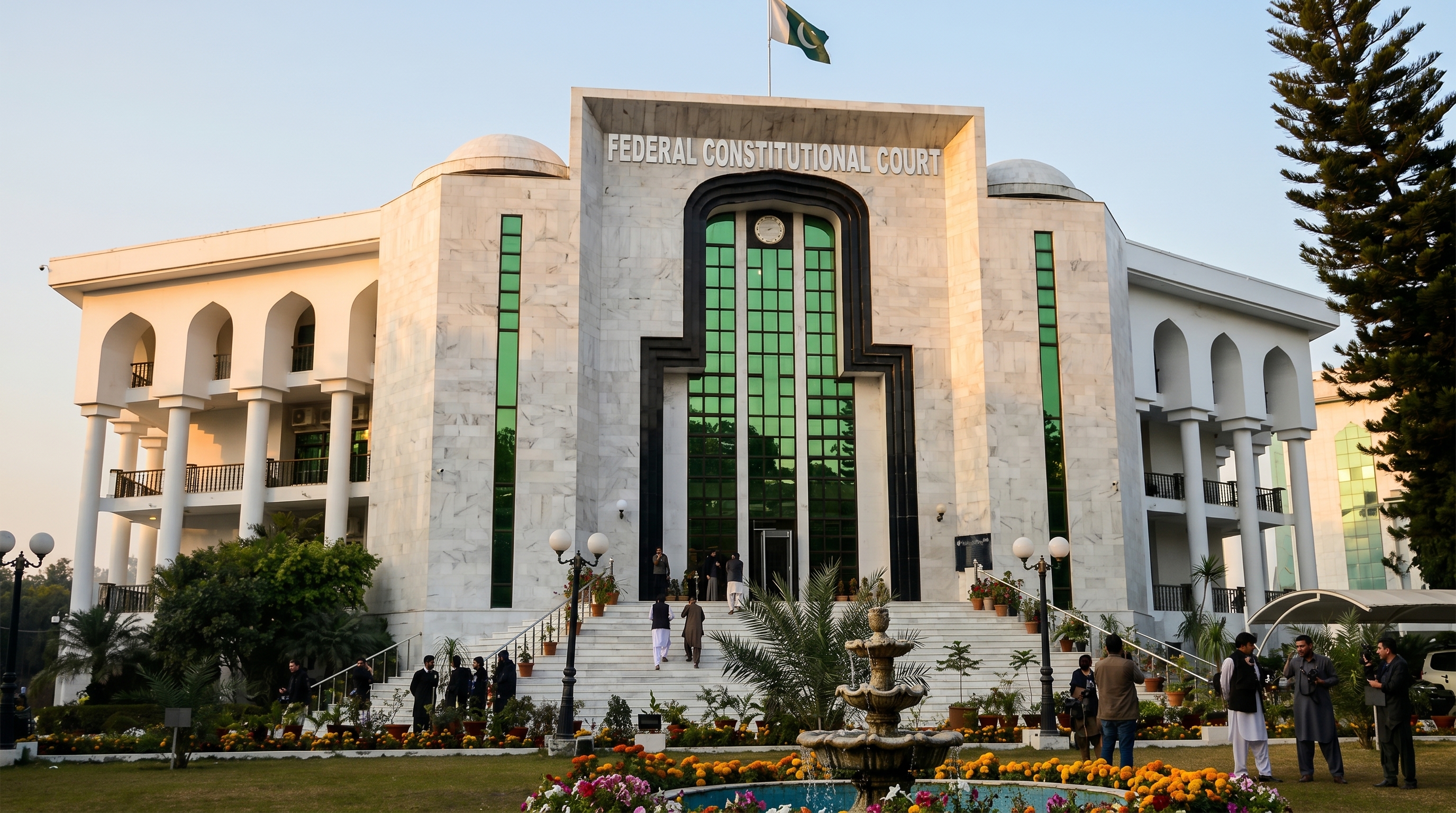
The Federal Constitutional Court has made a landmark decision that affects millions of property owners across Pakistan. On Thursday, the court declared Section 7E of the Income Tax Ordinance completely unconstitutional and void. This means the controversial "deemed income" tax on property, a law that taxed you on property value even if you weren't earning any income from it, is now dead. All tax notices issued under this law are cancelled. All proceedings are terminated. Hundreds of thousands of property owners who were fighting this tax have finally won their battle.
This judgment is massive for anyone who owns property in Pakistan. For years, Section 7E forced property owners to pay taxes on imaginary income. If you owned a house worth 10 million rupees but rented it for only 200,000 rupees yearly, the government would tax you on 500,000 rupees (5% of the property value) as "deemed income", money you never actually received. Now, that's over.
Problem That Led to This Judgment
In 2022, the government introduced Section 7E through the Finance Act as part of an aggressive effort to expand the tax base. The idea was simple but controversial: bring idle and under-declared real estate properties into the tax system by assuming a fixed percentage of their value as taxable income.
Here's how Section 7E worked:
If you owned property, the government assumed you were earning 5% of its fair market value as annual income, regardless of whether you actually earned anything from it. So if your property was valued at 10 million rupees, the government would tax you on 500,000 rupees of income even if the property sat empty or you rented it for less.
Why this was unfair:
Taxing fictional income: You were taxed on money you never earned. Income tax should apply to actual income, not imaginary amounts.
Double taxation: If you did earn rental income, you paid tax on both the actual rent AND the deemed income, paying twice for the same property.
Discrimination: Only property owners faced this. People with stocks, gold, or other assets didn't face deemed income taxes.
Unconstitutional: The constitution guarantees no one pays taxes without due process. Assuming income without proof violated this right.
Who pushed back:
Millions of property owners across Pakistan fought Section 7E. They filed cases in high courts in Peshawar, Balochistan, Islamabad, Lahore, and Sindh. Some courts agreed it was unconstitutional (Peshawar High Court, Balochistan High Court). Others upheld it (Lahore High Court, Sindh High Court). This created chaos, different courts, different rulings, property owners confused about what they actually owed.
What the Federal Constitutional Court Ruled
The Federal Constitutional Court, Pakistan's highest court, ended this confusion decisively. The two-member bench, led by Chief Justice Aminuddin Khan and Justice Ali Baqar Najafi, declared Section 7E completely unconstitutional.
The court's exact ruling:
Section 7E, the court said, "in its true nature and character, amounts to a tax on ownership of property rather than on actual income, and therefore could not be sustained under the Constitution."
The government's argument was that Section 7E was allowed under Article 77 of the Constitution, which gives Parliament power to levy taxes. But the court rejected this. Even though Parliament can levy taxes, it cannot create taxes that violate constitutional rights. And Section 7E violated the right to due process and equal treatment under the law.
What the court declared:
Section 7E is unconstitutional and void: The entire section is struck down. It's dead. No longer law.
All tax notices are invalid: Every notice issued under Section 7E is cancelled. They have no legal force.
All proceedings are terminated: All cases, disputes, and actions initiated by the FBR (Federal Board of Revenue) under Section 7E are now over. Property owners win by default.
All actions are unlawful: The FBR had no authority to issue notices or collect taxes under Section 7E. Everything done under this provision was legally unlawful.
The court also noted that the legal uncertainty created by different high courts ruling differently was now resolved. One nation, one law and that law is now gone.
Who This Judgment Helps
Property Owners Who Received Tax Notices
If you got a Section 7E notice from the FBR demanding payment, that notice is now void. You don't have to pay. If the FBR was collecting installments from your account, that practice stops immediately.
People Who Already Paid Taxes Under Section 7E
If you paid taxes under Section 7E, either voluntarily or under duress, you may be eligible for a refund. Consult with a tax lawyer about filing a refund claim. The money was collected unlawfully, and you deserve it back.
Property Owners in Disputes with the Tax Authority
If you were fighting with the FBR over Section 7E in court, the case is now resolved. Section 7E is gone, so your dispute disappears. You won.
Real Estate Investors
Real estate investors who were discouraged from investing due to Section 7E concerns can now invest more confidently. The deemed income tax burden is eliminated.
Overseas Pakistanis With Property
Overseas Pakistanis who own property in Pakistan were hit particularly hard by Section 7E because they often couldn't explain or contest the notices easily from abroad. This judgment protects them.
How Different High Courts Had Ruled Before This Decision
The confusion about Section 7E came from contradictory rulings across different high courts:
Courts That Struck It Down:
Peshawar High Court: Declared Section 7E unconstitutional
Balochistan High Court: Struck down Section 7E
Islamabad High Court: Found subsection 2 unconstitutional
Courts That Upheld It:
Lahore High Court: Upheld Section 7E in certain judgments
Sindh High Court: Upheld the provision
This created a mess. Property owners in Peshawar might be safe from Section 7E, while identical property owners in Lahore faced tax notices. The same law was constitutional in one province and unconstitutional in another.
Now, with the Federal Constitutional Court's ruling, all these different rulings are superseded. The highest court has spoken: Section 7E is unconstitutional everywhere. All high court judgments must follow this decision.
The Government's Argument (and Why It Failed)
During the hearing, the FBR's senior lawyer, Hafiz Ehsan Ahmad Khokhar, argued that Section 7E was valid because:
Parliament had constitutional authority to create it under Article 77
Deemed income is a recognized tax principle in many countries
The provision fell within legislative competence
But the Federal Constitutional Court rejected these arguments.
The court agreed that Parliament can levy taxes, but not taxes that violate constitutional rights. Even if deemed income is used elsewhere, it can't be used in a way that violates the Constitution. Parliament's power isn't unlimited, it must operate within constitutional boundaries.
This is a crucial principle: just because something is technically legal doesn't mean it's constitutional. The Constitution sets limits on what Parliament can do.
What Happens to FBR Notices and Pending Cases
If you had a Section 7E matter pending anywhere in Pakistan's tax system:
FBR Notices: All notices are void. Don't pay them. The FBR has no authority to collect under Section 7E anymore.
Pending Cases in Tax Courts: These cases are automatically resolved in your favor. The provision they were based on no longer exists.
Cases in High Courts: Any Section 7E case pending before high courts is now moot (no longer relevant) because the provision is gone. Courts will likely dismiss these cases as academic.
Objections Filed with FBR: If you filed objections to Section 7E notices, those objections are now granted by virtue of the constitutional court's judgment.
Refund Claims: If you paid taxes under Section 7E, you should file refund claims. The FBR collected unlawfully and owes you money.
Real-World Scenarios: How This Judgment Affects You
Scenario 1: You Received a Section 7E Notice Last Year
Before judgment: You had to pay or fight in court for months.
After judgment: The notice is void. Don't pay. If you already paid installments, file a refund claim.
Scenario 2: You Own Property Worth 50 Million But Earn No Rental Income
Before judgment: You'd be taxed on 2.5 million rupees of deemed income annually, even though you earned zero.
After judgment: No deemed income tax. You only pay tax on actual income, if any.
Scenario 3: You Own a Rented Apartment Earning 300,000 Rupees Annually
Before judgment: You'd pay tax on 300,000 (actual rent) PLUS maybe 500,000 (5% of property value), double taxation.
After judgment: You only pay tax on the 300,000 you actually earned. Fair taxation.
Scenario 4: You're an Overseas Pakistani With Property in Pakistan
Before judgment: You received Section 7E notices you couldn't contest from abroad.
After judgment: Those notices are now void. The FBR cannot pursue them.
Why This Judgment Matters Beyond Just Property Tax?
This ruling isn't just about Section 7E. It's about constitutional rights. The court has made clear that:
Parliament can't create taxes that violate constitutional rights: Even with good intentions, unconstitutional taxes are invalid.
Due process matters in taxation: You can't be taxed on fictional income. Taxation must be based on actual facts, not assumptions.
Equal treatment is essential: If property owners are taxed on deemed income, other asset owners must be too. Selective taxation violates equality.
Courts will protect citizens: When the government overreaches, courts will step in and protect constitutional rights.
What Property Owners Should Do Now
If You Received a Section 7E Notice:
Stop paying immediately: The notice is void. You have no obligation to pay.
Preserve documentation: Keep all notices, correspondence, and proof of any payments you made.
Consult a tax lawyer: A qualified tax lawyer can help you file a refund claim for any amounts paid.
File refund claim: The FBR collected unlawfully. You're entitled to get your money back.
If You're Currently Disputing Section 7E in Court:
Inform the court: Your lawyer should inform the court of the Federal Constitutional Court judgment.
Request dismissal: Since Section 7E is unconstitutional, your case should be dismissed as moot.
Pursue refunds: If you paid taxes during the dispute, claim them back.
If You Own Property and Feared Section 7E:
Invest confidently: Section 7E concerns are now eliminated. Invest in property without this tax burden.
Plan financially: Remove deemed income calculations from your tax planning. You only owe tax on actual income.
Stay informed: Watch for any government attempt to reintroduce similar provisions.
Could Section 7E Come Back?
The Federal Constitutional Court has declared Section 7E unconstitutional. For it to be revived, the Constitution would have to be amended, which requires a two-thirds majority in Parliament. This is extremely difficult and unlikely.
However, the government could try to introduce a similar provision with different language. To prevent this, property owners should stay vigilant and challenge any new deemed income provisions that violate constitutional rights.
What This Means for Pakistan's Tax System
This judgment sends a message to the FBR: you cannot expand the tax base through unconstitutional measures. If you want more tax revenue from property, you must do it constitutionally, with actual income, not fictional amounts.
For property owners, this is significant relief. For the government, it's a setback in tax collection. But it's important that the court protected constitutional rights even if it meant less tax revenue.
how will the government address the tax gap from property owners? Will it:
Accept lower tax revenue from real estate?
Try to increase actual rental income reporting?
Attempt to introduce a new property tax with constitutional backing?
Time will tell. But for now, property owners have won.
Conclusion
The Federal Constitutional Court's judgment declaring Section 7E unconstitutional is a landmark victory for millions of property owners across Pakistan. For years, they suffered under a tax based on fictional income, in violation of their constitutional rights. Now, that burden is lifted.
If you received Section 7E notices, they're invalid. If you paid taxes under this law, you deserve refunds. If you were fighting this in court, you've won. The highest court in the land has affirmed what property owners always knew: you can't be taxed on money you didn't earn.
For overseas Pakistanis, domestic property owners, investors, and anyone who believed Section 7E was unjust, this judgment is vindication. The court has spoken, and the law is dead.
Share Article
About Author
PropertyDealer Team
Property Expert
Experienced real estate professional sharing insights about Pakistan's property market.